
Feeding your O Warrior
A common question and concern for many Omphalocele moms is can I still breastfeed or do I have to use formula. In many cases, babies born with an Omphalocele will require assistance with feeding. Whether your baby is fed via feeding tube or receiving bottles, giving them your breast milk is still an option. If giving your breast milk to your baby is your goal, educating yourself on pumping could be a great place to start.
Pumping is a great option to still give your baby the best milk possible and most NICUs have lactation consultants available to help you get started and go through the whole process with you along with medical grade breast pumps to use while there. Some things they can help you with are, flange size, storing your milk, how long frozen/fresh breast milk lasts, working on supply, how often to pump, and what settings to use on your pump.
You are not in this alone and if you ever feel like its too much remember you have not failed! Pumping is completely optional!
Fed is best whether its by breast feeding, through bottle or a feeding tube.
Feeding tubes don’t have to be scary!
Drinking from a bottle or being breastfed is a skill some babies have to learn. Often in the NICU, especially if they have a lot going on, babies will be fed by a feeding tube and many need to go home with one. You have not failed if your child has a feeding tube, it just means they may need a little help putting on weight or that they have developed an oral aversion. Feeding tubes don’t necessarily mean forever.

There are many different types of feeding tubes but these are most common with our babies:
Nasogastric Tube (NG)
Small plastic tube that goes through babies nose down to the stomach
Nasojejunal [nay-zo-jeh-JOO-null] (NJ)
Tube placed through the nose down to the small intestine.
Proper placement is confirmed via x-ray, so and NJ will generally be placed at the hospital
These will be used instead of NG when the child has troubles such as severe reflux, struggles absorbing food, etc.
Also varies from NG and G-Tube in that food is delivered via a slow, continuous trickle.
Gastronomy Tube (G-Tube)
Tube placed surgically into the abdomen directly into the stomach
An extension tube connects to the G-tube (button) which can be connected to a pump or syringe.
Can give medications, fluids, formula or blended foods through.
Some children get granulation tissue around the G-tube site, Granulotion is great to keep on hand (can be bought on Amazon)
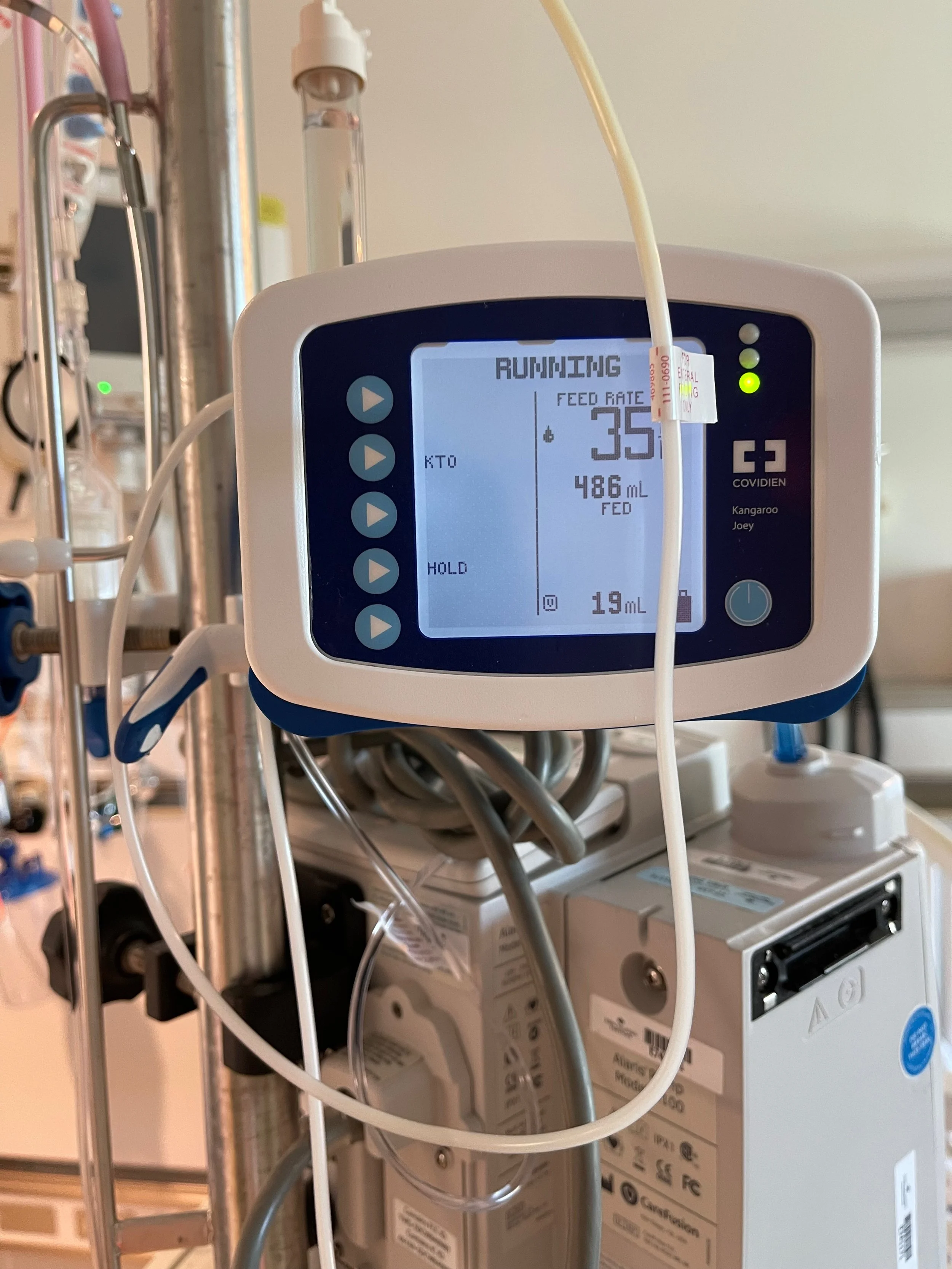
Once your baby is cleared from their doctor they may want to start trying to wean from the feeding tube:
Local support from speech therapists, nutritionists, and Gastroenterology
Growing Independent Eaters (GIE)
A company able to assist you in weaning your child from a feeding tube with the help online from a team of counselors, dietitians, and prior tube feeding parents.
You can set an appointment to consult with them to discuss if this is likely a good fit for your child.